Sunday, October 27, 2013

Week 13_October 25th

Topic: Days of the Week and Numbers from 11-20


Teachers: Gisselt, Cristela and Mónica

Vocabulary: Sunday, Monday, Tuesday, Wednesday, Thursday, Friday, and Numbers from 11-20

Grammar: What day is today? What is your favorite day?

As part of the Review: The numbers, the alphabet (How do you spell Sunday?), the colors (red, blue, yellow, green, pink, orange, brown, white, black), prepositions (Monday is between Sunday and Tuesday).

Lesson Plan:


Arrangement of the Classroom:

Monik's (Stage: Warm Up and Presentation)


Gisselt's (Stage: Practice [Part I])


Cristela's (Stage: Practice [Part II])


Warm-Up and Presentation:

First, I started with the "How are you today?" song with a different dynamic: 
There were three vertical stripes pasted on windows side. Ss were in line and followed me. Let's see the following video:


Although this performing activity could work a third time, I stopped in here because I just had 5 minutes for this activity. I had to perform a warm-up activity whose purpose was reviewing vocabulary from the previous classes: Family members, numbers, colors, and spelling. 


Every one had the opportunity to participate. That was great!!!

After this, I continued with the presentation of the topic: "Days of the week". I took Ss to the other part of the stage where the weekly planner was.

I started presenting the numbers from 11-17 whose purpose was just they had a little knowledge, thereby they had the chance to call them at the time we were completing the chart. Later they would have the opportunity to reforce them with more practice.


 Once they have recognized how to call the numbers whereby they had to call them and I discovered each day of the week in order to be pasted in the correct position of the week. I was focused on the pronunciation of the first letter of the days not in all of them.


Then, I said the days of the weeks with rythm by singing a song: 
"Monday, Tuesday, Wednesday, Thursday, Friday, Saturday, Sunday, What day is today? What day is today? Friday, Friday."


Class Observation and My Case of Study:

I could observed that Nicole could participate in the warm-up stage because there was one opportunity for each of the class; by the contrary, she did not participate in the participatory task because she is not willing as the rest of her classmates are.
It is true that Children learn by their own experiences, as Piagets claimed, however, Vygotsky claimed that children learn by the influence of their environment. To create a suitable environment is needed to analyze the implication of the cognitive process in education (schooling).
It was difficult to start with this lesson because the construction of an attuned context depends on prior knowledge of the students. In this specific clase, there was not any prior knowledge about days of the weeks; there was not any representation (picture-cued) to teach them. On the other hand, there was just a prior knowledge about the alphabet. As Vygostky suggested, teachers need to create a social base (scaffolding) in order to help to the cognitive development. For this reason, what I did was to construct an internal representation of external reality when I tried to connect days of the week with the sounds and thereby this finally worked because students could socialize sounds with the fisrt letter of the words.
I could observe this effect in Nicole, she produced the sounds as well as her classmates. 

Finally, I introduced the participation of Gisselt. 

Practice (Part I):

Gisselt started her presentation with a meningful task. She presented two uniques faces that got Ss involved in showing their feelings. Then, she continued by presenting the calendar.


As Vygotsky suggested, she used the calendar as sign of having interaction between the students and their physical world. Although they did not know the meaning of "calendar" exactly, they could associate the latin american word "calendar" by "calendario". This was certainly a physical object in which the days of the week appear. Students could take place within a social relation and thereby they produced this approach in the following activity.

She handed out seven cards and whereby they had to represent the days of the weeks. 


It was interesting to see how they were linked the color represented on the board with the color of the card that they had. Of course, it was not the way in which they had to do it, but I could see how they were looking for a key or cue to solve their problems. They are congnitively connected with the physical environment in which they are.

After this activity, they had to perform another task with the boxes.
Let's see how this worked:


Nicole had connected the sound, the word and the calendar at this moment. She could do the task. That was great!


Practice (Part II):

Finally, Cristela presented a missing word game by skiping some days of the week in order to have Ss complete the missing days of the week.


It was interesting to see how students were curious in knowing what was happening around them when they were asked to closed their eyes.

Finally, they had a great moment to play with clay in order to set the spelling of the words.


Although the time was not enough to finish this task they were so excited about doing it. They did not want to finish doing it!!!!!


Saturday, October 19, 2013

Workshop_October 18th

I would like to start this Entry with this video...

Keep an eye on it!!!!!


“What is a teacher? I'll tell you: it isn't someone who teaches something, but someone who inspires the student to give of her best in order to discover what she already knows.”

Paulo Coelho


Then, I would like to share this information about some tips that we as teachers can take into account at the time we are performing a class. A well designed class is the one that has the influence of motivation in all the activities... Let's see the first part of a video...


Here you have the second part, this video aims at motivating teachers to have Ss be engaged in the class...


Techniques in Class


The first technique presented was "The Memory Game" taught by Iliana Escobar.


She presented three different options to play this game in class.
This game could be used for any level and any topic. But, T needs to be aware with the goal of the activity. What do want to measure? What do we expect that learners reach?
  • Grammar
  • Vocabulary
  • Vocabulary in context

The first memory game presented was about looking for the same picture by putting the cards faced down.


The second activity was about looking for a word or picture in order to match them.


The third activity was about looking for a missing word to fill in the gaps or viceversa.


She provided these types of activity to be implied in groups, and pairs. Other ideas arose during her presentation, for example: "Create this activity bigger to make the hole class be involved." 
I think this activity could be adequate for each level, and the successful will depend of the complexity in which the technique be implement in the classes by teachers.


Materials and Budget:

* colored papers...............$0.20
* glue.............................$0.50
* printed pictures.............$0.75 (could vary)
* tin plated cardboard.......$0.00 (could vary)
                                      $1.45


The second technique presented was "Boxes" taught by Gisselt Romero.


I like this Gisselt's thought, "You run out of ideas when teaching kids?..." I think teaching kids, teenagers, even adults; it is difficult to keep in mind all the ideas together, and thereby at the end we do not know what other activity we can use in class.
She suggested a topic which was "Pets"; however this technique permits teachers apply any other topic, or simply, give other uses to the boxes.


This technique, as Gisselt suggested, can be performed in a practice stage. For me, this techniques could take part of a warm-up stage, as well as in a wrap-up stage.
The objective of doing this activity is to encourage Ss to practice vocabulary in a dynamic way by dividing the group into two. Furthermore I cosider that this technique help Ss to develop their motor skill.This goes for developing the gross motor skill as much as the fine motor skill; in a way they are standing up and having the control to throw the ball, they are developing the gross motor skill, on the other hand, in a way they are thinking in throwing the ball, they are handling the ball in their hands to have a precise throwing. One imput to our brain is the sight and therefore the fine skill is manipulated in a right way in order not to fail the throwing.

Suggestions for this activity:


* Use the boxes to keep extra materials, such as worksheets, recycled paper, small toys, crayons, colors, pictures, flashcards, etc.


* Use the boxes not only to practice vocabulary but also grammar (according to the level). Paste on each box short answers like "yes, I do", "no, I don't". Ask Ss to throw the ball in the correct box in order to give a response for the question that somebody has done (not only teacher can ask, Ss can).


Materials and Budget:

* boxes (the ones that we have at home)........ $0.00
* colored paper............................................ $0.20 per unit (bookstores)
* glue......................................................... $1.00 the bottle (bookstore)
* printed pictures......................................... $0.30 per each (print copy)
                                                                  $1.50

The materials could vary according to the creativity and budget that each teacher could have.


The third technique presented was "Puppets" taught by Luis.


teaching with puppets is a funny experience for children to learn ESL. Puppets materials could vary, the use of them is actually widespread.

Let's see this video to see how puppets are so famous and used to teach in not only American School but also in India and other countries...


Let's see this video to see how important and useful puppets are to teach; in fact, they provides Ss with opportunity to be supported in situations that are unfamiliar or challenging.


Let's see this following video to see why puppets are pedagogical recomended. Teaching strategies can be practiced and adapted to meet the needs and individual Ss.


In this opportunity, Luis provided different type of puppets that teachers can use to perform a short story, conversation, introducing new vocabulary, even grammar. 

Let's see the variety of puppets that we can create:
  1. Coddly toys.


  2. Sock puppets.
  3. Finger puppets.
  4. Card puppets.
  5. Paper puppets.
  6. Toilet roll puppets.
To more creative we are, the better results we will have in class.

Materials and Budget:
* It could vary.
It depends on the material that we are going to use.

Let's see how Luis performed the use of this technique...


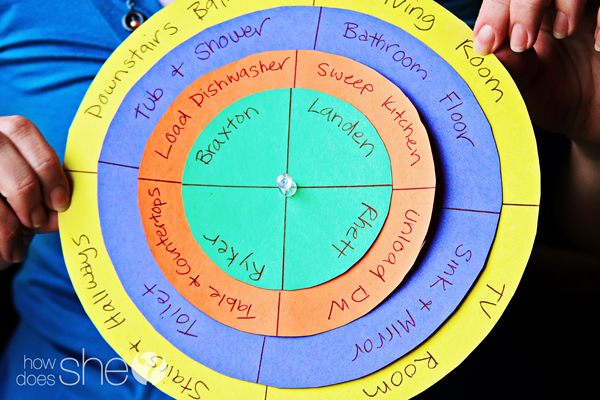
The fourth technique presented was "Spinning Wheel" taught by me (Monik Ponce).


I would like to share this flyer, here I present an option of how this technique could be used in class at the time we want to teach ESL. Click on the link:


Some suggestions arose during the presentation, let me list them:

  1. Use different categories. I consider that these depend on what we need to measure and thereby the complexity will go further.
  2. Use the spinning wheel on a table.
  3. Use the spinning wheel with four different sectioned wheels.

The fifth technique presented was "Telling Story" taught by Raúl Montoya.


Raúl presented a great idea for taking into account in class, "flip chart", if we want to tell a story.


Raúl suggested some steps:
  1. Select an interesting story for children.
  2. Memorize the basic story.
  3. Use hand motion to emphasize the events in the story. Gestures, tone of voice, even movements with other parts of my body are pretty important to catch children's attention.
  4. Add details. Details impress to the listeners.
  5. Practice in advance. 
This interesting technique make Ss be participants in the class all the time. How is it possible?
During the teacher is telling a story, teacher could encourage Ss to infer in what will happen then, next, and finally. Even, we can encourage Ss to figure out what will be the final part of the story.
On the other hand, if we just need to practice vocabulary, we can make a pause during the story to push them to give a response; for example, "once upon a time, the witch wanted to become a ________ (Princess)...". Even if we want to encounter vocabulary, we can use this technique.


Materials and Budget:
* It could vary.
We can use recycled paper, card board; pictures from a newspaper, magazine, etc.

Let's see the following video which presents how Raúl performed this activity.


The fifth technique presented was "Name Tags" taught by Ingrid Giron.


Name tags ease the performance and the control of the class. The class could be interactive and dynamic, if we use the name tags as part of the activities.

What Ingrid proposed is a "food & drinks" name tag that can be used in a practice stage. This activity is presented like a matching game with pictures inside the folded name tag.

Materials and Budget:

* cardboard.................$0.80
* fabriano paper..........$2.25 (folio)
* glue........................$1.50 (1 bottle)
* printed images......... $0.80
                                 $4.55 (this budget could vary of the place where you can find the materials)

  • The topics, material could vary, and the stages as well. It depends on the creativity that teachers have.


Suggestions:
  1. This technique could be applied for rewarding children at the end of the class, to let them know how good they have participated during the class.
  2. It is useful to check the attendance. 

The Sixth technique presented was "Modeling Clay" taught by Cristela Navarro.

Modeling Clay helps students not only for being creative but also for developing their fine motor skill at thed time they are modeling the clay. I can say that this activity motivate students because they can create people, buildings, furnitures, shapes, fruit, animals, vehicles, and more.
It's is important to take into account:
* give clear instrucctions
* use nontoxic and completely free of any side effect clay
* model what you expect they do

In this opportunity, Cris showed a "snail".

Materials and Budget:

* Clay could vary. It depends on the place we get them.
* Clay (green, yellow, blue, and red).......... $2.00


Here, I show how I was developing my creativity by following the intructions and looking at my classmates.


All the steps were clear and she was modeling to motivate us to follow her.


Here, I present my progress!


Every step was carefully controled.


My partners were so motivated doing this activity.


My final "snail" project!


 Juan's, JC's, Raul's "Snail"!


I really enjoy doing this activity!

As Cristela and my partners said, "It can be used to introduce vocabulary, to practice in class, and to produce an clay art!"

The Seventh technique presented was "Songs and Chants" taught by Juan.

This is nearly the last technique, and I want to consider this following link that aims at using music to have a positive effect in class. It encourage students to show their emotions, and creativity. It also helps students to create a social environment.

http://www.edutopia.org/music-develop-social-emotional-character

This does not cost any, at least if the song that you can sing in class is in a CD Class. On the other hand, teacher can download the selected song from internet.

The chant that Juan presented was: "Days of the Week".

Days of the Week

Days of the week,
(2 claps)
Days of the week,
(2 claps)

Days of the week,
Days of the week,
Days of the week,
(2 claps)

Sunday
and then Monday,
and Tuesday,
and then Wednesday,
and Thursday,
and then Friday,
Saturday,
...


There was other suggestions; play a song during students are developing an class assessment.

Our teacher, Yanny, presented other way to teach the alphabet.


This was great!!!! Everybody participated!!!!!

The eightth technique presented was "Disposable Plates" taught by Mercy Márquez.


We can create lots of things with diposable plates. One of this was presented by Mercy. She made a demonstration with this material, "Family's bag".


Materials and Budget:

* 2 plastic disposable plates....... $1.92
* glue or cold silicone.................$1.22
* scissors
* decorative ribbon.................... $1.26
* pen
* Family members' body shapes
* Clothes items
* ruler
* glitter................................... $0.95
                                               $5.35

The procedure:
Using a ruler, draw a line to form a hand-grip. Cut by following the line. Do the same with the other disposable plate. Then, paste them to form a bag. Next, decorate the disposable bag to your own. Finally, use it to play with the students in a practice stage, warm-ups, even production stage.


The nineth technique presented was "Recycled Paper" taught by JC Henríquez.


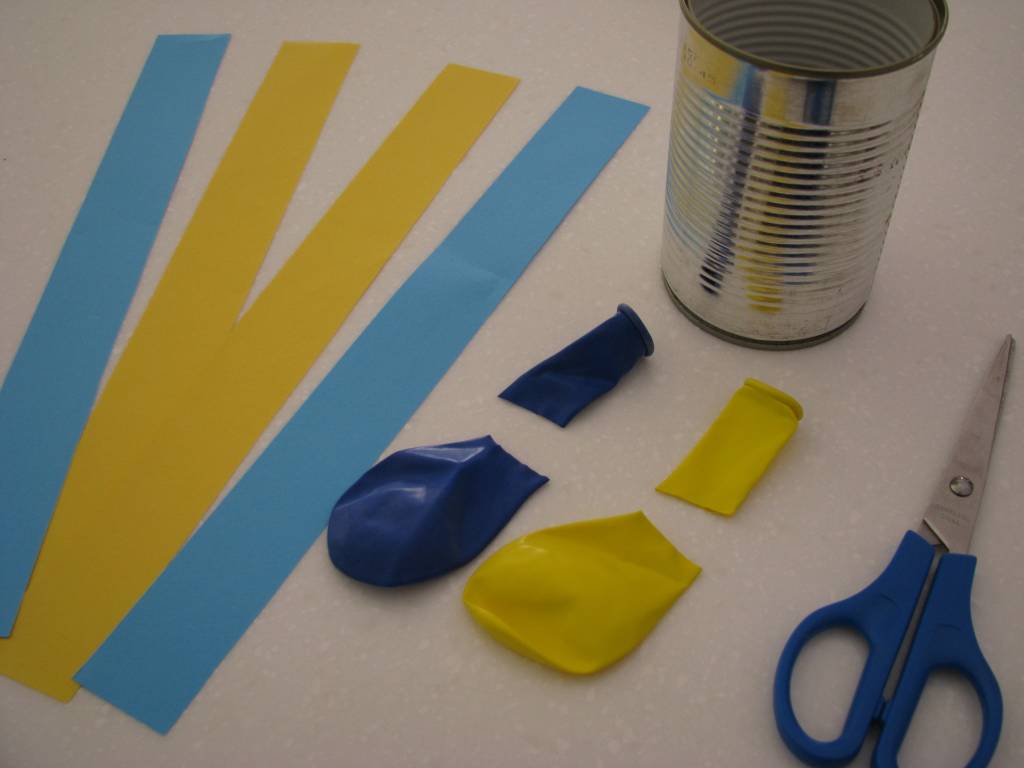
JC presented an useful "Recycled Shaker". This instrument is needed to keep the rhythm and add the effect of a song.

JC invited us to try this instrument that according to him, this will do the trick!

Materials and Budget:

* an empty soft drink can................ $0.00
* a few pebbles (rise, beans, sand).. $0.00
* colored paper.............................. $0.00
* marker....................................... $0.00
                                                    $0.00

It's fantastic! It's free!!!!

We can use any other recycle paper to have a participatory, emotional, armony class.

Even, we can use it to call the attention over children if we notice a misbehavior in class.

Try it!!! :D